When choosing the right mower for a job, two of the most common options are rotary mowers and flail mowers. While both are used to manage vegetation, they work in very different ways and are suited to different applications.
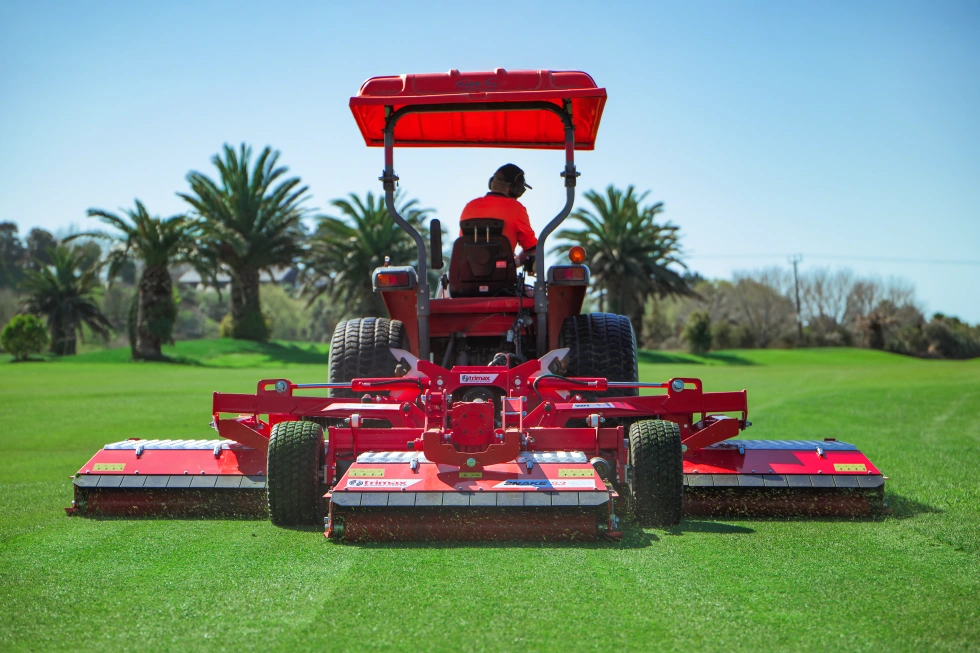
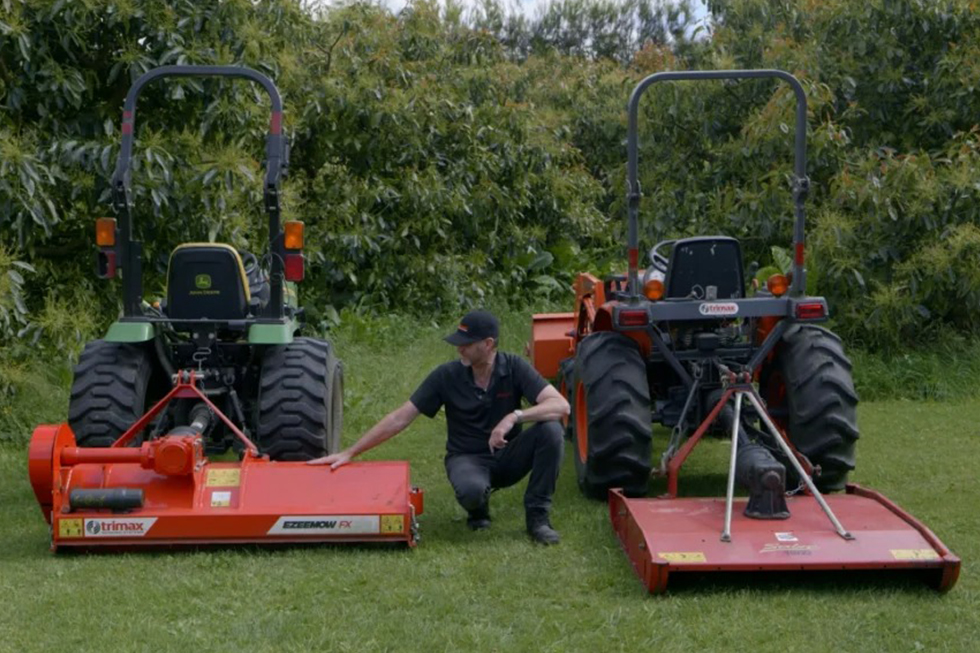
A rotary mower is designed for fast, efficient grass cutting over large areas, using one or more large blades that rotate on a vertical axis. A flail mower is designed for safer cutting and mulching in tougher conditions, using many small flails on a horizontal rotor inside an enclosed cutting chamber to control debris and produce finer mulch.
What is a Rotary Mower?
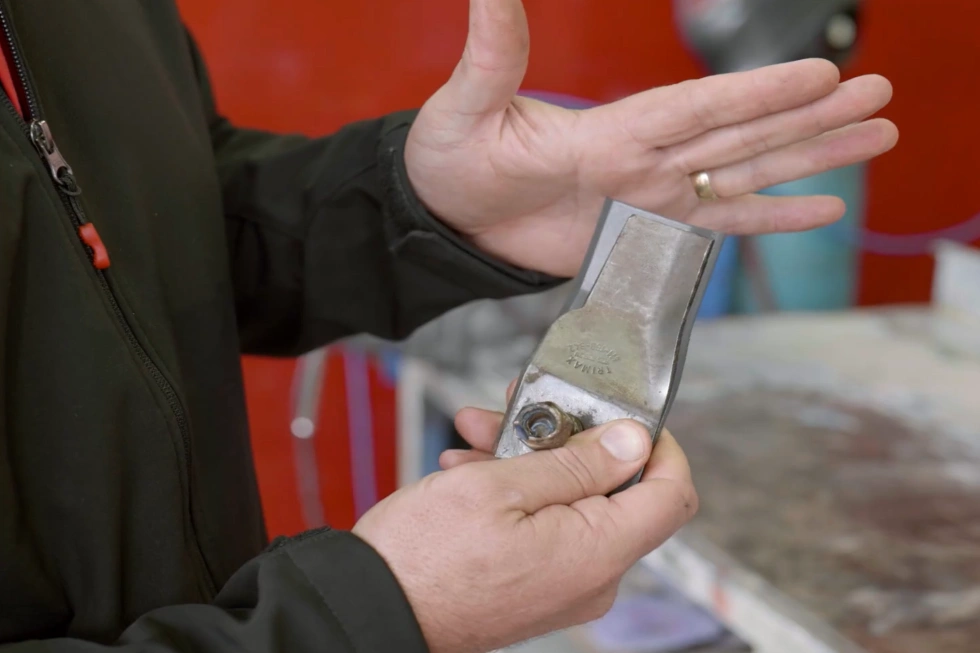
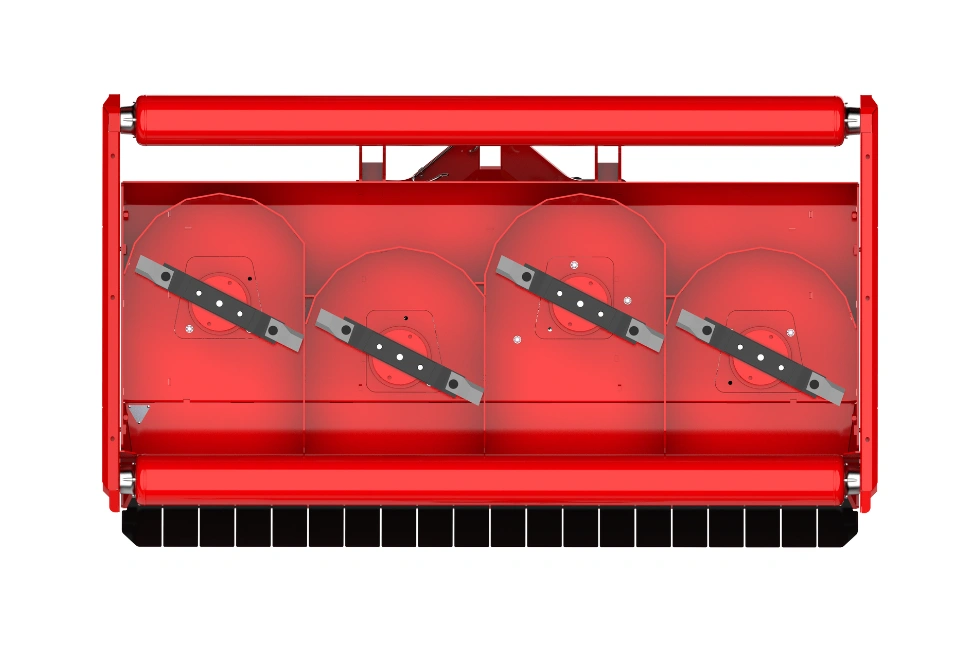
A rotary mower cuts grass using one or more large blades that rotate horizontally around a vertical axis beneath the mower deck. The blades cut vegetation by striking it at high speed.
Rotary mowers are designed for efficient grass cutting over large areas. Their ability to operate at higher speeds and wider cutting widths makes them highly productive where ground conditions and vegetation are relatively consistent.
Typical strengths of rotary mowers:
- High productivity and fast coverage
- Handles varying grass heights well
- Simple, robust mechanical design
- Ideal for general-purpose grass cutting
Rotary mowers are commonly used in parks, sports fields, golf course surrounds, reserves, and agricultural areas where cutting efficiency is the priority. Read more about rotary mowers here.
What is a Flail Mower?
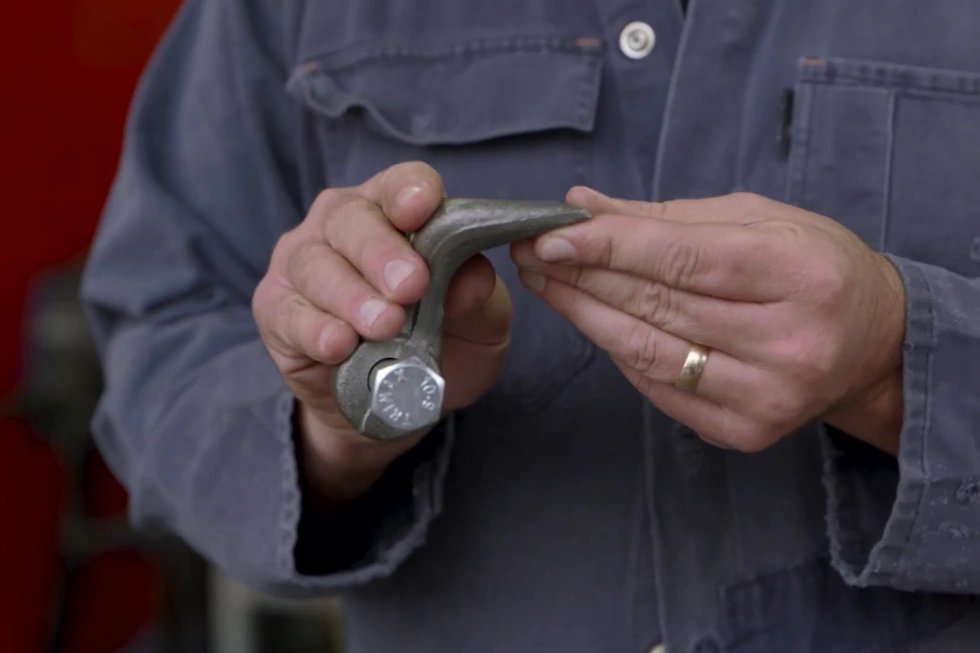
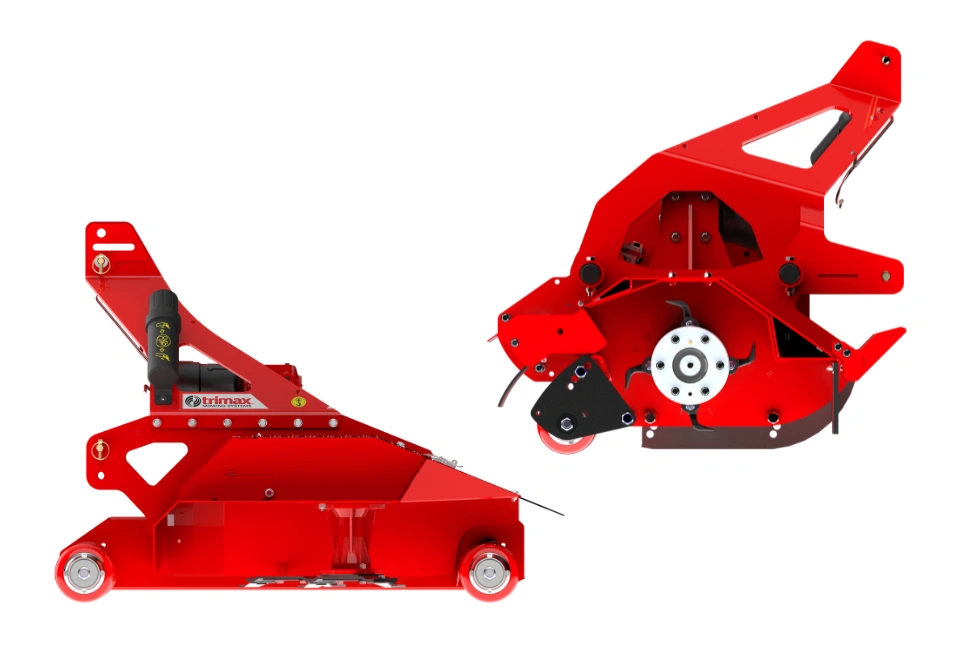
A flail mower uses many small blades or hammers, known as flails, mounted to a horizontal rotor inside an enclosed cutting chamber. As the rotor spins, the flails strike vegetation repeatedly, cutting and breaking it down into smaller pieces.
Instead of cutting grass in a single pass, a flail mower cuts, shreds, and mulches vegetation inside the cutting chamber. This produces finer clippings and improves residue breakdown.
Typical strengths of flail mowers:
- Improved safety through enclosed cutting
- Excellent mulching and residue control
- Handles weeds, long grass, and debris
- Performs well in rough or uneven terrain
Flail mowers are widely used in roadside mowing, council and contractor operations, horticulture, and areas where safety and debris containment are critical. Read more about flail mowers here.
Key Differences
Cutting Method
- Rotary mower: One or more large blades rotating on a vertical axis, cutting by impact.
- Flail mower: Multiple small flails rotating on a horizontal shaft, cutting and mulching through repeated strikes.
Finish and Clippings
- Rotary mower: Leaves longer clippings that are dispersed behind the mower.
- Flail mower: Produces finer mulch that breaks down quickly and leaves a more controlled finish.
Productivity
- Rotary mower: Typically faster with wider cutting widths, ideal for covering large areas quickly.
- Flail mower: Slower operating speeds but greater control in difficult conditions.
Safety
- Rotary mower: Open cutting system, best suited to open areas away from people and obstacles.
- Flail mower: Enclosed cutting chamber helps contain debris, reducing projectile risk near roads and public spaces.
Terrain and Vegetation
- Rotary mower: Best suited to maintained turf and general grass cutting.
- Flail mower: Better for rough ground, uneven terrain, weeds, and debris-heavy areas.
Summary
Operators choose rotary mowers where productivity and speed are the priority, and large grassed areas require regular maintenance. Flail mowers are best suited to applications where safety, mulching, and debris control are critical, particularly in roadside or rough vegetation environments.
Visit our customer success stories to see how different Trimax rotary and flail mowers perform in real-world applications.